KYOKO TANAKA DISCUSSES JAPAN?S ENTRENCHED
BUREAUCRACIES AFTER THE 311 EARTHQUAKE
Special for THE NEW TIMES HOLLER!
From the Epi-Central Department by
© Amir Bey, 2011
November 21
|
There are many lessons from the disaster that struck Japan this past March 11. Lessons for earthquake preparedness, nuclear energy, alternative energy sources, and about ties between governments and industrial complexes.
In the US we have the Military Industrial Complex. In Japan, there's the Utility Industrial Complex, which is just as powerful.
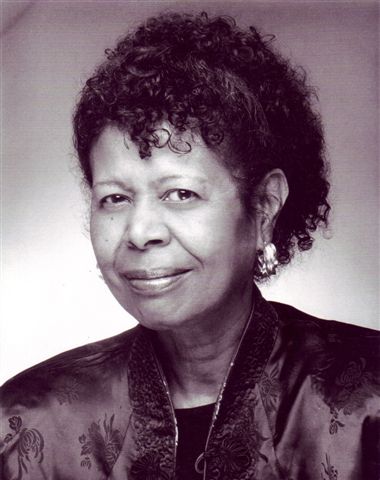
THE NEW TIMES HOLLER! spoke with Kyoko Tanaka, a free-lance journalist presently living in Hanno, just outside of Tokyo, concerning these issues. About herself she says:
"My name is Kyoko 'Kiki' Tanaka. I am a citizen of Japan and this universe. I was a journalist writing mainly on health and medical issues. [Now] I am writing more about alternative medicines, not western school medicine so I am in the process of studying more and at the same time,
I am looking for any magazines that I can write for.
I am also volunteering for
Safecast [Safecast is a global sensor network for collecting and sharing radiation measurements]. I would like to work for the people in Japan and the universe. Now, Japan is turning the corner and which way we go will be determined by our decisions and actions."
|
KYOKO "KIKI" TANAKA

|
HOLLER!: What did you experience at the time of the Honshu Earthquake?
KYOKO TANAKA: It was March 11th, around 2:45; I was at my apartment, on the second floor and working. First, I started hearing trembling. The earthquake had started. We have
earthquakes quite often, so I thought it was just one of those, but this shaking did not stop for a while; rather, it became bigger and bigger and the noise was getting bigger too, so I grabbed my cell phone and ran out. When I was on the road, I saw the concrete surface was widening. I had never seen something like that before. I thought, ?Oh my god, this must be really bad, especially near the epicenter!?
At that time, I knew the epicenter was not so near Tokyo by the way of the shaking. We are so used to earthquakes and we can kind of predict where the epicenter is by the type of shake. The shake lasted about 10 minutes or so; it was the longest and strongest shake I have ever experienced in my life!
|
|
The Explosion at Fukushima Daiichi Reactor

|
HOLLER!: The crisis at the nuclear plants in Fukushima occurred as a result of the earthquake, and the following Tsunami. The necessary preparation for the magnitude of the earthquake and the tsunami wasn't possible, but there has been much criticism about government policies concerning the nuclear reactors in Fukushima. What is your take on the government's performance?
KYOKO TANAKA:The Japanese government acted poorly. Especially, they kept TEPCO [Tokyo Electric Power Company] as it was. I think that was a big mistake. They should not have let TEPCO survive, but allowed them to become bankrupt. TEPCO is a monopoly energy company in Japan, and therefore, there are lots of interests involved.
But most of all, the government should have evacuated a much bigger area in Fukushima, especially, for children, babies, and mothers. Instead, they kept saying over and over that Fukushima is safe, not to get panicky. And after eight months millions of people are still living in so-called "hotspots", and the government has not figured out completely where exactly the hot spots are, inside and outside of Fukushima.
|
Tsunehisa Katsumata took over TEPCO, Asia's largest utility when a 15 Billion US dollar loss, more money than any other company in Japan's history, forced the president Masataka Shimizu to resign. Katsumata and TEPCO's executives have taken the brunt of unusually fierce criticsm from the media and shareholders after the tsunami caused the explosion that knocked out power from the Fukushima nuclear plant. While the 311 disaster along with the company and governemt's lack of forthrightness has resulted in mistrust and tarnished reputations, there are some who feel that an opportunity to pursue alternatives is slipping away.
|
Tsunehisa Katsumata, CEO of TEPCO

|
HOLLER!: What is the housing situation for the people who lost their homes, and those cities that were completely destroyed?
KYOKO TANAKA: The situation varies depending on the area. The mountain areas have little flat land. And those flat lands were all swept away by the Tsunami, and people are not allowed to live anymore in the tsunami disaster zone. So, people have to evacuate far away from their home town. When the areas have enough flat land, then it?s a little better. There are still lots of people living in evacuation shelters such as schools or public facilities. There are more pre-fabs, or small housing, but once they move to the pre-fabs, they have to start paying rent, utilities, etc. that some people cannot afford. In addition, pre-fabs are temporary housing, so it is very hot during summer time and very cold during winter time.
HOLLER!: How do you see the effects of these two catastrophes on the psyche of the Japanese people?
KYOKO TANAKA: This is not easy to answer. I see many negative sides and also some positive sides too. Like lots of people are going up north to volunteer. Lots of people want to help the Tohoku region recovery.
Meanwhile, we are facing TEPCO incidents. Nobody is taking accountability and TEPCO does not pay any compensation to people outside the 20 km zone. Their responsibility is only inside this danger zone. Such nonsense! And various local governments are still trying to push resuming nuclear power plants. In fact one of Hokkaido?s reactors resumed in August despite a petition of over million people's signatures against it.
The bright side is more people have become aware of the truth about nuclear
energy. We do not need it. And people are starting to raise their voices about it.
Meanwhile, people in Fukushima have been told by authorities that they should not make a fuss about radiation.
That is certainly a Japanese tendency, people do not resist the government, are very obedient. So I see more people standing up, but at the same time, I see that still many people are easily convinced, or they do not want to see the reality. But why are they so quiet and obedient? Maybe their information sources are limited. The countryside is full of elderly people and they probably do not do internet. So naturally, incoming information must be limited from radio, newspaper, and TV.
|
|

national geographic
|
HOLLER!: While the government wasn?t completely transparent, I wonder how much it is to blame. I ask this because while mistakes were made, if a powerful earthquake hit New York City, where there have been mild tremors recently, the level of preparation for earthquakes is far from what Japan has.
KYOKO TANAKA: In a way, yes, you are right. But in Fukushima's case, the government should be blamed. They deliberately did not institute safeguarding methods. Many scientists were warning about the dangers of the Fukushima nuclear power plant, and others too.
- There are many more dangerous plants in Japan! They knew it and they did not do anything. This is a big sin. And nobody in TEPCO is taking charge concerning this. Nobody in this country is taking any responsibility about this. This is what is strange and something that should not happen.
|
|
An Anit-Nuclear Energy Demonstrator

|
HOLLER!: There have been demonstrations: anti-nuclear, and anti-government. Have there been protests similar to the Occupy Wall Street demonstrations that have been happening not only in the United States, but in other parts of the world?
KYOKO TANAKA: I know there were demonstrations in the US, but I do not know very much about Occupy Wall Street. As far as I know, Germany made a big demo a few days after Fukushima, attended by millions.
HOLLER!: Do you see any benefits from these disasters? Have the Japanese people developed a new sense of themselves?
KYOKO TANAKA: Yes. I think so. There are lots of things going on. And it is really
interesting that all of the people who want to do volunteer work and doing something for good, we can meet these people easily. Before 311, we probably would not know or meet these people. Japanese are developing a new sense, I would say yes. But not so obvious or not nearly equal to what I was expecting. But certainly, yes, I can see more and more people are starting to change and try to make our society better.
HOLLER!: Are alternative organizations being developed?
KYOKO TANAKA: There are lots and lots of citizens? organizations born since 311.
I am also a volunteer of an organization called Safecast (safecast.org). This group measures radiation in Fukushima and neighboring areas voluntarily. This is just one example. There are number of citizens' groups helping others and I also saw that many people went up north to volunteer in the disaster zones.
|
Masayoshi Son, a Japanese of Korean descent, is the wealthiest person in Japan, the CEO of Softbank, and holds a large per cent of shares of Japan's Twitter and other companies. He strongly challenged the government and TEPCO's use of nuclear energy, saying it passed its peak in the 80s, and that its promoters' claim that it's inexpensive is deceptive once the costs of maintenance are taken into account. He donated millions of Yen to earthquake victims. For more on Son's views on nuclear energy and alternative energy sources, see
Masayoshi Son Castigates the Nuclear Industry by Michael Penn
Masayoshi Son

| |
HOLLER!: Have new ?leaders? come forward with new concepts that people are responding to?
KYOKO TANAKA: Not that I know of. There may be somebody. One person I have known about is Masayoshi Son, the president of Softbank, one of Japan's major mobile phone companies. He had an internet meeting with former president Naoto Kan. At this meeting, Kan said that Japan should stop relying on nuclear energy. Son has a lot of potential. But he is a business leader not a politician.
HOLLER!: However as a businessman, he is influential politically: Son has the support of 33 out of 47 prefectures to search for alternatives to nuclear energy. In your opinion, do you see that politicians ? and the business community ? are making necessary adjustments concerning nuclear power?
KYOKO TANAKA: There may be some movement, but the power of bureaucrats and major politicians is just enormous. This is beyond our imagination. Recently, I read a book written by a former METI (Ministry of Economy, Trade and Industry) bureaucrat who wanted to change Kasumigaseki [the bureaucracy] and literally got kicked out of METI. There are certainly those people who really think Japan needs to change and are trying to change it.
But nobody can win over the bureaucrats? huge power. As for the business community, many companies have started to realize that there is more potential working on solar energy or alternative energies. So I think we will start to see more actions, but not so soon.
HOLLER!: What is the position of the Japanese government towards US troops in Okinawa?
KYOKO TANAKA: The Democratic Party and LDP [Liberal Democratic Party] are pro-US, but the Communist party and other small parties are anti-US troops. Personally, I am anti. There is no necessity to keep the US base in Okinawa. But, many people say it?s to protect us from the influences of China and N. Korea.
HOLLER!: Is that different from how the people in Okinawa feel?
KYOKO TANAKA: I have never been to Okinawa or have talked to Okinawans directly, so this is only what I have heard. Many Okinawans are not happy about US troops. But also some people benefit from their presence, so there is not only one opinion.
|
|
|
|
|
|
|
|